Miss Representation

The documentary ‘Miss Representation’ was born of Jennifer Siebel Newsom’s anxiety in relation to the world she lives and grew up in and how that world would treat and shape the person her daughter would come to be, inspired by Newsom’s own struggles growing up in the entertainment industry. 

One of the most interesting aspects of sexism that Newsom deals with in the film is how out if touch multi-billion-dollar advertising industries do not pay attention to the female half of the population. Instead focusing on the niche market of males aged eighteen to thirty-five. I myself identify with this niche market of males aged eighteen to thirty-five and as such benefit from entertainment that feels more targeted to me. While this could be seen as a good thing, as I directly benefit from this targeted advertising, it would be selfish to say that this is fair or justified. Focusing on and prioritising the feedback of a single group as a society is backwards in that no one group should be put ahead of any other at all. One could argue that the documentary deals with this from an entertainment point of view and that no real harm is done by focusing on one group. I would argue that putting one group, males between eighteen and thirty-five in this case, above all other groups reflects the way society views the marginalised groups that those in entertainment or advertising don’t seem to care about. 

Miss Representation argues effectively that all groups should be represented fairly in media through using the example of the mistreatment of women. One example of this is the replacement of Catherine Hardwicke in the second movie of the Twilight film series. A woman was replaced as the director of the film series as soon as the producers recognised the money-making potential of the film series, reflecting the view of women in society. It would not be a stretch to say that Catherine Hardwicke would have greatly enhanced the quality of the Twighlight Saga had she continued working on the series. Newsom uses this example of mistreatment to highlight the problems that we as a society seem to have with women in positions of power, highlighting the inequality at play, while also telling us that society as a whole would benefit by people being judged for what they have done or what they can do rather than their race, gender or sexual orientation. 
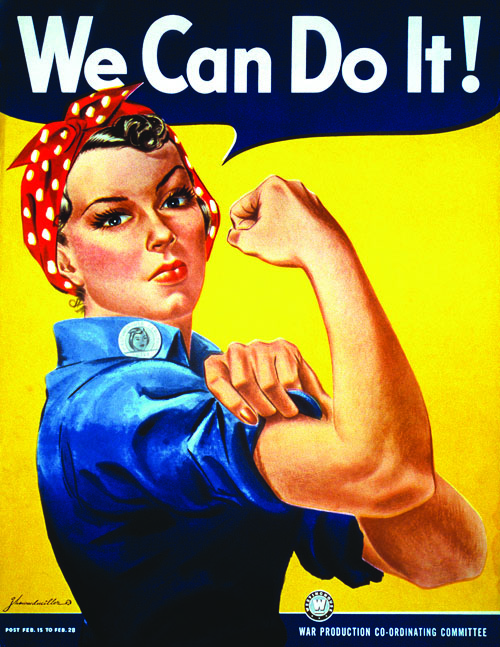
Newsom goes on to describe the indoctrination of the children of today at the hands of television, citing that children today consume around ten hours of media per day, a number that has surely grown since the release of the documentary. Children are being fed these ideas that women are inferior and should be subservient to men. The media tells children how they can express themselves and shuns them for going against the grain. Similar to the other films I have watched as a part of this module, the power of media and the control it has over our lives is present here. The key takeaway here is acceptance and equality. We should stop teaching children mindless stereotypes and let personality take center stage over appearance. 

REFERENCES

  1. Miss Representation. Directed by Jennifer Siebel Newsom, Girls’ Club Entertainment, 22 Jan 2011. 
  1. Twilight (2008). Directed by Catherine Hardwicke. 

The Internet’s Own Boy

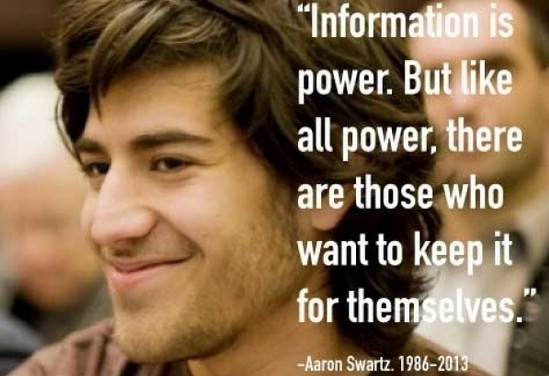
Aaron Swartz was arguably the very first ‘hacktivist’, someone who would use their knowledge of hacking and computers in order to promote political or social change. Swartz perfectly embodies the hacktivist persona in that he believed wholeheartedly in the greater good. Swartz believed in the freedom of information and that the current collegiate system of locking away papers behind a pay wall is immoral and unjustified.

Swartz released thousands of academic papers online and as such was indicted in Federal District Court on four felony counts: wire fraud, computer fraud, unlawfully obtaining information from a protected computer and recklessly damaging a protected computer. Swartz was continually pressured by the FBI and the United States government and felt more and more threatened by these parties that he eventually hanged himself.  

This was the most tragic and sad of all the documentaries I watched as a part of this module and as such had a profound effect on me as a viewer of the documentary. Aaron Swartz was a gifted young man who had accomplished more in his short life than most ever do. In the documentary we are introduced to his family and close friends as well as colleagues who admired and respected him. This created a sense of knowing with me as I watched the first half of the documentary where we are introduced to Swartz and added to the sad tone of the documentary when it is revealed that Swartz committed suicide as we can see the devastation in the eyes of his friends, family members and colleagues as they recount their feelings of loss. Also contributing to the personal feeling of the documentary was the old home video footage and pictures of Swartz as a child.

Many who would watch this documentary would be familiar with Swartz professional work life but few would have an insight into the person he was in his private life. This documentary helped to humanise him and subsequently helped me to identify with Swartz and realise the injustice committed in the way he was treated. Swartz was used as an example to future hacktivists and as such his sentence was far harsher than his crimes deserved. 

The issues that I found interesting that were dealt with in this documentary were the flaws of the American legal system. The abuse of power demonstrated by the United States government in this documentary against someone with good intentions was harrowing. The fact that there are people in positions of power that are content with ruining the lives of someone like Aaron Swartz shows clearly that justice in places like America needs to be reevaluated so that people who want to help others are not shunned and driven to suicide by those in positions of power that value making money over human lives.  

Swartz questioned why information should be restricted to those who can afford it and suggested that information would benefit humanity as a whole were it freely available to anyone and paid for asking these questions with his life. It is because of him that the internet is the way it is today and it is our collective responsibility to honour his memory by fighting for civil and educational liberty today. 

REFERENCES

  1. The Internet’s Own Boy: The Story of Aaron Swartz. Directed by Brian Knappenberger, Luminant Media and Unjustsus Films, 27 Jun 2014.

Rating: 7.5 out of 10.

Citizenfour

“Arguing that you don’t care about the right to privacy because you have nothing to hide is no different than saying you don’t care about free speech because you have nothing to say.”

– Edward Snowden

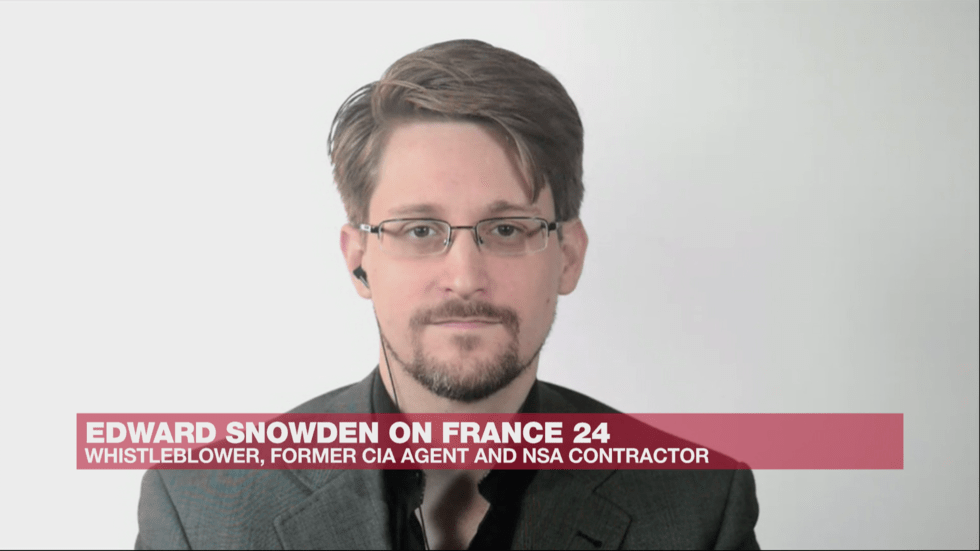
According to Wikipedia, the practice of state surveillance in America dates back to the first world war in which intelligence agencies in the US would block international communications to or from the US. This practice continued over the years known but never quite understood to the public. Until 2013 when Edward Snowden exposed to the public that the National Security Agency was abusing its power in mass surveillance and that mass surveillance was now a very serious issue. 

As Citizenfour is the final episode in Laura Poitras’ Oscar winning America Post 9/11 trilogy, the director herself exposes her own experiences involving the US government. She tells us of her fears of bringing hard drives with her to the US as they would be unjustly taken from her and wiped under the guise of searching her luggage.

This personal experience with the current Orwellian state of the United States really helped me to understand the effect of this over policing of information can have on innocent people like Poitras who was just making a film exposing the flaws of the government and how instead of taking on board this criticism, the United States government would censor this information, silencing one of its own citizens. This experience shows that the opinion “it doesn’t matter to me; I’m not doing anything wrong” is largely inconsequential seeing as anyone who would speak up against potential tyranny would be silenced and subsequently tracked by the very people Edward Snowden once worked for. This experience also echoes the key message of the film which is that censorship in the way it is currently being exercised in the United States is an abuse of power.

One of the most interesting things about this particular documentary that is not present in many other documentaries was how Poitras was documenting events in real time. Seeing such an historic event in real time coupled with the explanation of the events given by the film created something that I have never before seen in a documentary. The real time documentation highlighted the gravitas of the issue while also providing an understanding of current events as well as a sort of wakeup call for the abuses of power currently going on in the world in relation to internet security. This realness in the film is one of the main reasons that this film is so much more successful than others related to the Snowden leaks (e.g, Verax(2013) and Snowden(2016). None of the other films feel as personal as this one both relating to the subject matter and the subject of the leaks, Edward Snowden himself, and as such have a lesser effect on the viewer in my opinion. 

What appealed to me the most in this film was the subject matter that it dealt with. In a world wherein which our online privacy is continually more and more at risk, it is good to know that there are people in the world like Poitras and Snowden that are willing to do their part to help civil liberty. 

REFERENCES

  1. Snowden. Directed by Oliver Stone, Endgame Entertainment and Vendian Entertainment and KrautPack Entertainment, 16 Sept 2016. 
  1. Verax. Directed by Jeff Floro, Edwin Lee, Shawn Tse and Marcus Tsui, J.Shot Videos, 25 Jun 2013. 
  1. https://en.wikipedia.org/wiki/Mass_surveillance_in_the_United_States 
  1. Citizenfour. Directed by Laura Poitras, HBO Films and Praxis Media and Participent Media, 10 Oct 2014. 

🌶️🌶️🌶️🌶️🌶️🌶️🌶️🌶️

Design a site like this with WordPress.com
Get started