
“Arguing that you don’t care about the right to privacy because you have nothing to hide is no different than saying you don’t care about free speech because you have nothing to say.”
– Edward Snowden

According to Wikipedia, the practice of state surveillance in America dates back to the first world war in which intelligence agencies in the US would block international communications to or from the US. This practice continued over the years known but never quite understood to the public. Until 2013 when Edward Snowden exposed to the public that the National Security Agency was abusing its power in mass surveillance and that mass surveillance was now a very serious issue.
As Citizenfour is the final episode in Laura Poitras’ Oscar winning America Post 9/11 trilogy, the director herself exposes her own experiences involving the US government. She tells us of her fears of bringing hard drives with her to the US as they would be unjustly taken from her and wiped under the guise of searching her luggage.
This personal experience with the current Orwellian state of the United States really helped me to understand the effect of this over policing of information can have on innocent people like Poitras who was just making a film exposing the flaws of the government and how instead of taking on board this criticism, the United States government would censor this information, silencing one of its own citizens. This experience shows that the opinion “it doesn’t matter to me; I’m not doing anything wrong” is largely inconsequential seeing as anyone who would speak up against potential tyranny would be silenced and subsequently tracked by the very people Edward Snowden once worked for. This experience also echoes the key message of the film which is that censorship in the way it is currently being exercised in the United States is an abuse of power.
One of the most interesting things about this particular documentary that is not present in many other documentaries was how Poitras was documenting events in real time. Seeing such an historic event in real time coupled with the explanation of the events given by the film created something that I have never before seen in a documentary. The real time documentation highlighted the gravitas of the issue while also providing an understanding of current events as well as a sort of wakeup call for the abuses of power currently going on in the world in relation to internet security. This realness in the film is one of the main reasons that this film is so much more successful than others related to the Snowden leaks (e.g, Verax(2013) and Snowden(2016). None of the other films feel as personal as this one both relating to the subject matter and the subject of the leaks, Edward Snowden himself, and as such have a lesser effect on the viewer in my opinion.
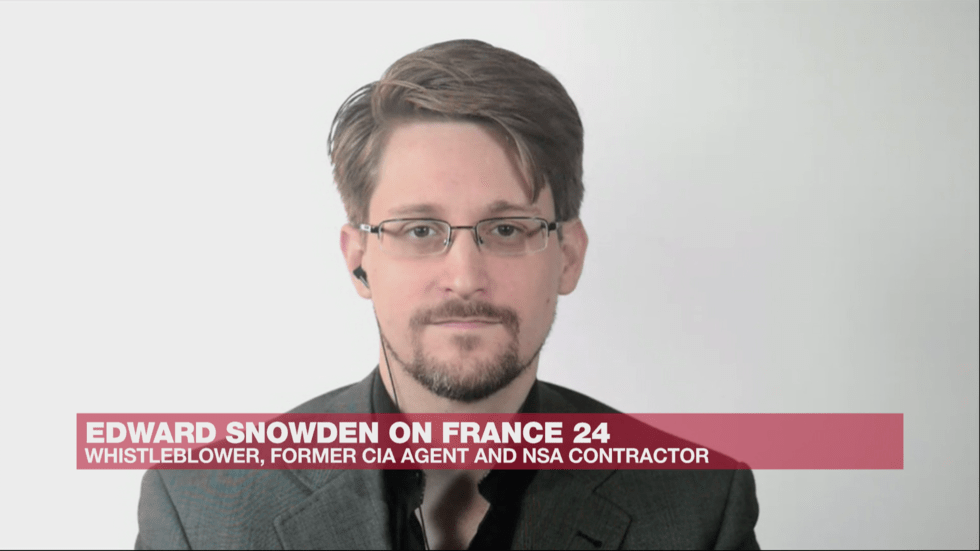
What appealed to me the most in this film was the subject matter that it dealt with. In a world wherein which our online privacy is continually more and more at risk, it is good to know that there are people in the world like Poitras and Snowden that are willing to do their part to help civil liberty.
REFERENCES
- Snowden. Directed by Oliver Stone, Endgame Entertainment and Vendian Entertainment and KrautPack Entertainment, 16 Sept 2016.
- Verax. Directed by Jeff Floro, Edwin Lee, Shawn Tse and Marcus Tsui, J.Shot Videos, 25 Jun 2013.
- Citizenfour. Directed by Laura Poitras, HBO Films and Praxis Media and Participent Media, 10 Oct 2014.
 Oscar's Blog